
Animals, Architecture and the Critique of Modernity
Fabian Reiner
https://aa-hct.myportfolio.com/animals-architecture
The following is an interview conducted with Kostas Tsiambaos following a seminar at the Architectural Association on 30 January 2020.
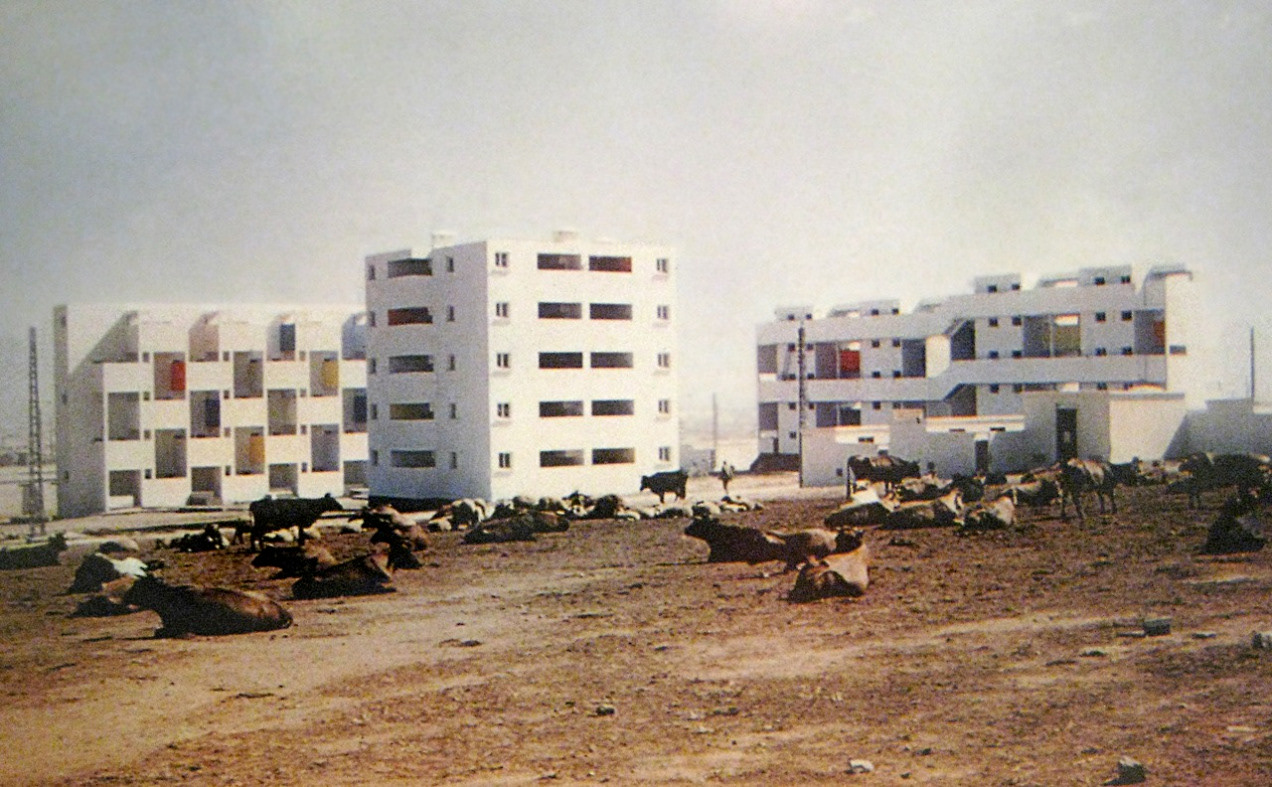
Figure 1. Candilis’ and Wood’s Cité Verticale, 1953.
Fabian: In your seminar "Animals, Architecture and the Critique of Modernity" you touched upon the disengagement of modern architecture with its environment (e.g. Georges Candilis’ and Shadrach Woods’ Cité Verticale in Carriéres Centrales [fig. 1]) and mentioned that in representational images of these very projects animals were needed to depict culture and the surrounding context. Is modern architecture, in your eyes, unsuccessful in communicating its specificity and locality because it misses out on the potential of the animal within architecture?
Kostas: In the case of those photos I presented during the talk, where Candilis worked with Woods in Casablanca in the early 50ies, I really doubt that the animals were staged in any way. Although it appears as they play an important role in the setting of the photo, I don't think this is on purpose. However, the fact, that the photographer included the animals, even if it merely could not be avoided, provides a certain cultural framework to the image – and at the same time, architecture itself gains its status. So the buildings without the animals, in my opinion, would not have the same power and the same impact – or in other words, Modernity as an argument would not be so strong – would be thinner. Even if Woods and Candilis had studied traditional berber architecture according to Jean-Louis Cohen and other researchers before they designed these specific buildings in this specific context, it is the presence of the cows or the mules – you remember there was the photo of the man on his mule [fig. 2] – that set the building in their locus. All this, of course, can be seen in a broader postcolonial discourse, but in my opinion and the way I approach this case study, it is interesting that the animals become bearers through their silent presence. So, while the building is a projection of a modern, socialist, or colonialist apparatus, the animals are authors of critique and resistance both in aesthetic and cultural terms.
Fabian: So, in order to understand modern architecture you need the animal to locate the project. But through the animal you can also critique its architecture. What are the ways of including the animal in the reading of architecture?
Kostas: In most cases in modern architecture it is through representations, photos, images or sketches, exactly because architects themselves do not speak about these animals. And of course, animals do not speak either. So, only through this indirect way we can think of this second level of critique in relation to this material.
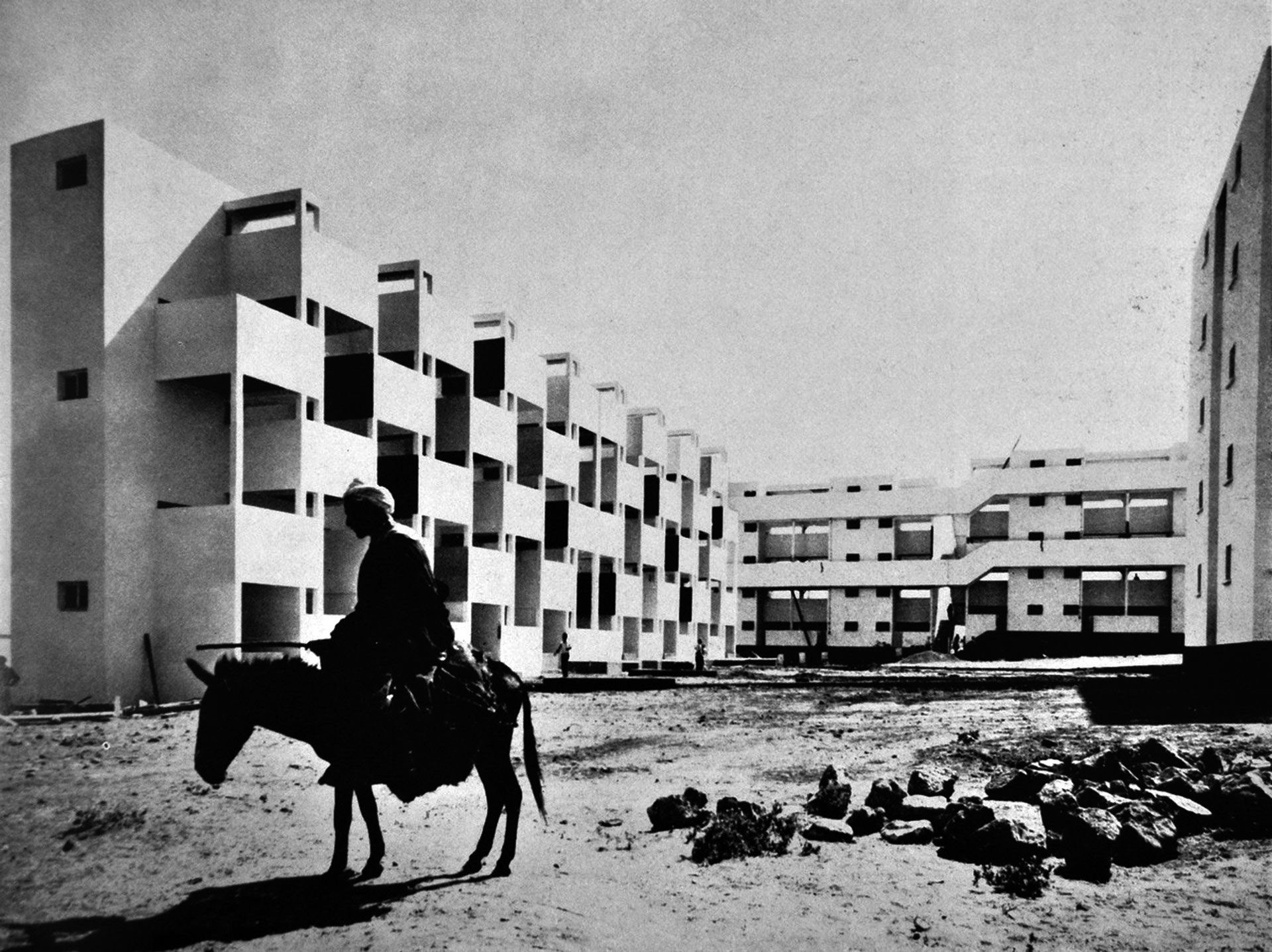
Figure 2. Candilis’ and Wood’s Cité Verticale, 1953.
Fabian: For me, it seems, although performing through a degree of abstraction, that already Candilis’ and Woods’ Cité Verticale has inherent an animalistic character – even without including imitations of animals. It is informed by natural processes such as the growth of form and metabolism as we know it from studies from the mathematical biologist D’Arcy Wentworth Thompson [fig. 3]. What is your stance towards that?
Kostas: Yes, you are right. It is true that all these biological notions of evolution, development, adaptation, metabolism, etc. were attributed to the physical world and were very important also for architecture and architects such as Candilis. Specifically Candilis believed a lot in an adaptive and evolutive habitat. I mean, from the scale of the city to the scale of the house, he believed that architecture should be adapted and in constant evolution in relation to the inhabitants as well as the context – D'Arcy Thompson's "On Growth and Form" was considered important for many architects. When Candilis left Athens, he went to Paris and started to work for Le Corbusier as an architect. For many years he was a colleague of Corbu and the architect responsible for the Unite d'Habitation in Marseille. So, Le Corbusier was extremely influential for Candilis and D'Arcy Thompson's book "On Growth and Form" was one of the main, and if not main at least one of the books we know that Le Corbusier was referring to. In general, the influence of biology on postwar modern architecture was very clear and something that has been written about extensively. So, one could agree, as you do, that Candilis’ project in Casablanca could be seen as a structure expressing these animalistic or broader biological principles but my note on this is, that this can become too broad. In a sense, which architectural structure does not conform in one way or another to such principles?
Fabian: It does not necessarily specify it, right? It is like the animal in general but not touching upon a specific species in a distinct landscape, or distinct culture?
Kostas: I agree. If you go beyond the form of architecture, its formal attributes and the fact that some principles and characteristics evolve over time, metabolism applies to all structures. You can argue about this concerning every project and every architecture. It is also for this reason that I am less interested in that aspect – and interested in the animal in a more literal way. I prefer to discuss and to talk about dogs, donkeys, cows, giraffes, and ravens, not for notions such as metabolism or evolution but because of their specific characteristics. E.g. you can theorize and describe every kind of architecture using evolutionary algorithms. You can find a few algorithms and can think about how this can be related to architecture in evolutionary terms. But because all this can become too vague and too open, it becomes less meaningful and less important in historical and critical terms.
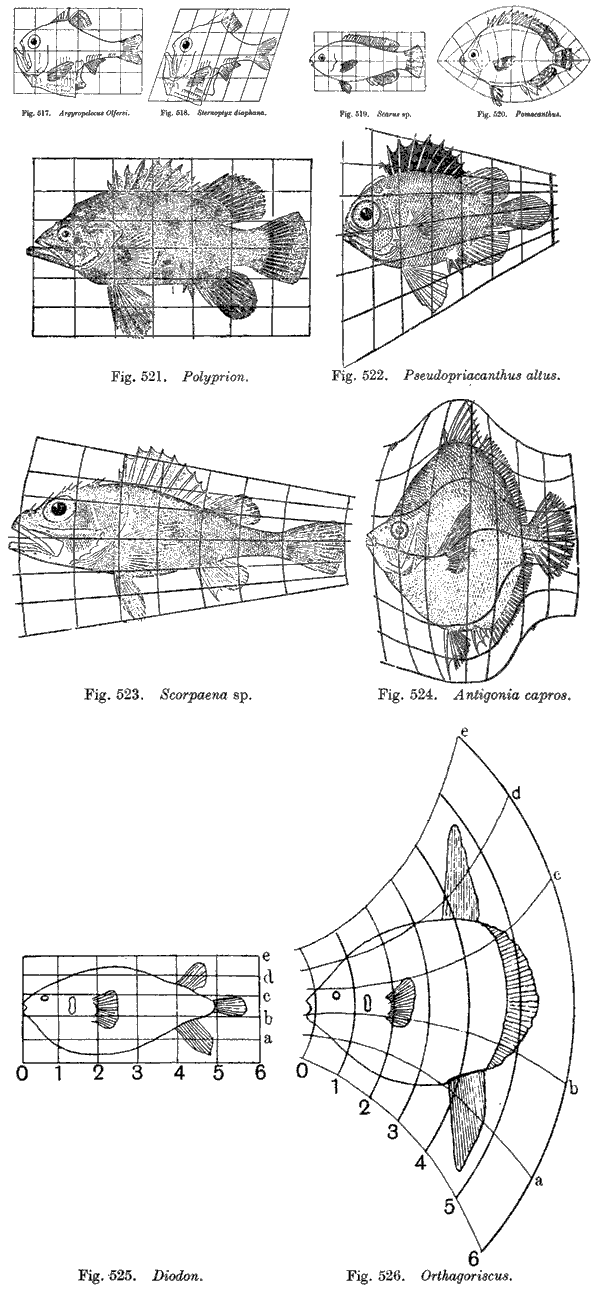
Figure 3. D'Arcy Thompsons' On Growth and Form, 1917.
Fabian: In your seminar, you touched upon the fact that certain architects represent certain animals – that there is a direct relation. What I am intrigued by is, how can these characteristics be applied to architects? How does an architect have to be to be classified as a dog, or a raven? Is there a particular classification that has been established?
Kostas: You see, I prefer to be closer to a historical approach. So, I do not try to impose certain characteristics on certain architects. I am trying to find through historical case studies how architects refer to animals, or how architects represent animals, and for which reasons. However, it is not clear most of the time. You have to see everything in a broader cultural or philosophical context. You have to make a small network where an animal is interlinked to other references and other case studies in order to understand what is really going on. But of course, certain architects identify with certain animals – and I will talk about this later. There are very specific animals that are of value for specific architects. I had an interesting discussion about this with Christine Boyer a few months ago at Princeton. She had written a book about the Smithsons, and she was telling me how important the cat was in the case of theirs. So yes, I always try to follow closely on what is the actual history of architecture and what is the actual evidence we have. I think it is always better for any theoretical construction to have a strong historical foundation or, at least, to be aware of architectural history.
Fabian: In general it is quite a tiring procedure and it seems it is a process that takes a lot of energy in order to be understood.
Kostas: Yes, it does, because you know the evidence is so limited and so scarce. You have to dig in-depth and you have to expand a lot to reconstruct those networks I was telling you about. You first have to develop this huge interrelation of references, images, photographs, and sketches, and then you try to isolate a few cases and see if something richer and more meaningful comes out of them.
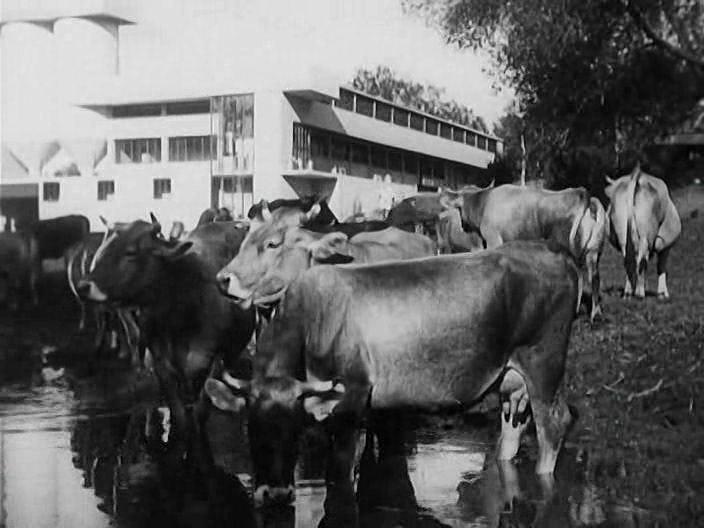
Figure 4. Andrei Burov’s milk farm in Sergei Eisenstein’s The General Line, 1929.
Fabian: Extending on the seminar and your thoughts of modern architecture turning even the animal into a scientific measure, as was shown in your presentation with Sergei Eisenstein’s film-still of a modernist farm [fig. 4], is architecture, for you, an event that can be positioned on an axis along nature and science? Is architecture once rather natural and then closer to the scientific? And where does the animal position itself there?
Kostas: Yes, this relation between nature and science is very important in general and there is a certain kind of approach in this kind of relationship in modern architecture. I have to clarify here that when I talk about modern architecture, I include postmodern and hypermodern and see it as a next face of modern architecture. In any case, a typical way of discussing animals in relation to modern/ postmodern architecture is in the context of formality. So, e.g. a building, geometry, structure or surface reminds us of an animal. And another way is to consider structures designed by architects for animals – e.g. zoos, like those designed by Lubetkin and the Tecton Group or the farms by Cedric Price. In both of these cases, modern architecture is considered as a practice that turns nature either into theory or into science. So, we get something which is not very well defined, and we try to interpret it into something which has scientific rules, form, procedures and follows a certain reason. In all of these cases, the focus is not on animals as having an identity, or authority of their own. Animals are usually seen as monads, as items, who just represent their species without having any voice. They are instrumentalized in most of these cases. They become machines themselves – a kind of Cartesianism, where Descartes believed that animals were nothing but machines for many reasons. So, in this modern discourse, we have this kind of simplistic or naive Cartesianism, where animals just represent their species and nothing more. And at the same time, here your question gets interesting, the relation of the building to its natural environment is something similar. It is a kind of formal juxtaposition. You have a building, and it is very clear that the relation to nature is a relation of juxtaposition. The building becomes something which is rational and is put against something which is free, irrational and uncontrolled – in this case, nature. But again, I am more interested in the cases in which animals and animalistic references in modern or postmodern architecture gain another status – where they transcend this kind of instrumental standing. I do not want to argue that architecture should stop being a science in any way, not at all, but I want to discuss architecture as a science which is more open, closer to humanities and closer to culture. In this point of view, which is rather open and not strictly positivist, the animal can become the other of the human and can attain a more critical role.
Fabian: In a way, as modern, hyper- and postmodern architecture positions itself closer to science, the biggest issue is that the animal is taken as an economic value rather than seen as a cultural identity. I think it is true that there we need to find new ways to engage with the animal.
Kostas: Yes, because, you know, we cannot afford to continue seeing the animal as a tool, as something without any authority, or without any power. The strange thing is that people still believe that whatever we do, animals cannot be but a commodity. But there is a way for us scholars and researches to find a kind of agency in these animals. The thing, for me, is to open the whole ecology of animals in architecture in a more cultural way, and through this to rethink architecture.
Fabian: That makes total sense, and I hope it is working. I hope we will steer towards this in the future.
Kostas: I think sooner or later it will. You know the situation today with the Corona-Virus, without going in the very details here, started from someone who ate a strange exotic animal somewhere in an open market in China. I mean, if we see this relationship with the animal in a more instrumental way, yes okay, we will find a medicine, a vaccine, or any kind of thing to invert this mess, but at the same time, this kind of fact, or evidence, can be of use in a broader cultural and philosophical context. It is not just the question to cure people and to find a way to invert the evolution of the virus, but there are many other questions emerging out of what just is.
Fabian: It also shows the limits of science, and that science in its own terms is not the only solution.
Kostas: Of course, science must keep on working right now, nobody doubts this. We need to find a way out of this as soon as possible but there are so many other questions around this, which are also related to animals in other ways, that we can open a very interesting discussion.
Fabian: In your seminar, you raised the question if the animal is something other than the machine? And you argued that the Surrealists cultivated a strong dichotomy between these two. Does for you the reliance on aspects such as economy, prefabrication, and systems, how it occurs e.g. in Candilis’ and Woods’ work, prove a disconnection of the modern architecture from the animal?
Kostas: That is true, in general Modernity is seen as the appropriator of the machine, and the Surrealists were important in this discussion. They can be very interesting in the case of modern architecture because of their reading of psychoanalysis. They tried to find alternative ways of discussing the animal. But, of course, they also had the machine. Anne Anlin Cheng, who teaches American Studies and Cultural Studies at Princeton, had written an interesting book on Josephine Baker, and the relation of Josephine Baker to architects such as Le Corbusier and Adolf Loos. In this, she argues how Baker, and especially her dance, was something between the animal and the machine. At that time that was very fascinating for architects as well. But this coexistence of the animal and the machine is something that existed before Modernity, just think of the Trojan Horse. In modern architecture, we have all these kinds of theories, systems, tools, materials and techniques borrowed from industry, and which were used in architecture. So, for example, Candilis who was very much interested in Marxism –he was Marxist himself at least when he was young– he saw in the technological paradigm a similarity to architecture. He believed that architecture was part of technology. And as it was part of technology, the aim of modern architecture was to provide a better life for the people, especially for the lower and the middle classes. The animal was not really up for debate – maybe, again, because animals as in Marxism are just tools at the service of humanity. Of course, this is not to accuse Candilis or Marx, because we talk about the 19th or early 20th century. It is not possible to project our notions, our way of thinking, our empathy and concern about animals as we have them now, to those actors. We are talking about totally different eras, a changed context, different philosophies, and needs. It is clear that for them the animal was something rather inferior in relation to what we think now.
Fabian: If I think about your answer, maybe I would need to reformulate the last question and say that instead of modern architecture proves a disconnection from the animal, modern architecture shows the animal as alienated from its natural and cultural value. So basically, the animal is always part of modern architecture – it only surfaces as more scientific.
Kostas: Exactly, because if you want to schematize it a bit, already in the 18th and 19th century and all the way to premodern society, the animal is used more as a machine. Then, in Modernity, the animal is replaced by the actual machine. It starts to lose all its symbolical and cultural dimensions. It starts to become thinner and thinner in terms of content and becomes a machine until the time where it is totally replaced by the actual machines. The animal is alienated because it cannot be seen as something else than the machine. We have to go all the way to the late 60s to see through Peter Singer's "Animal Liberation" the start of the animal studies – and the start to talk differently about the animal.
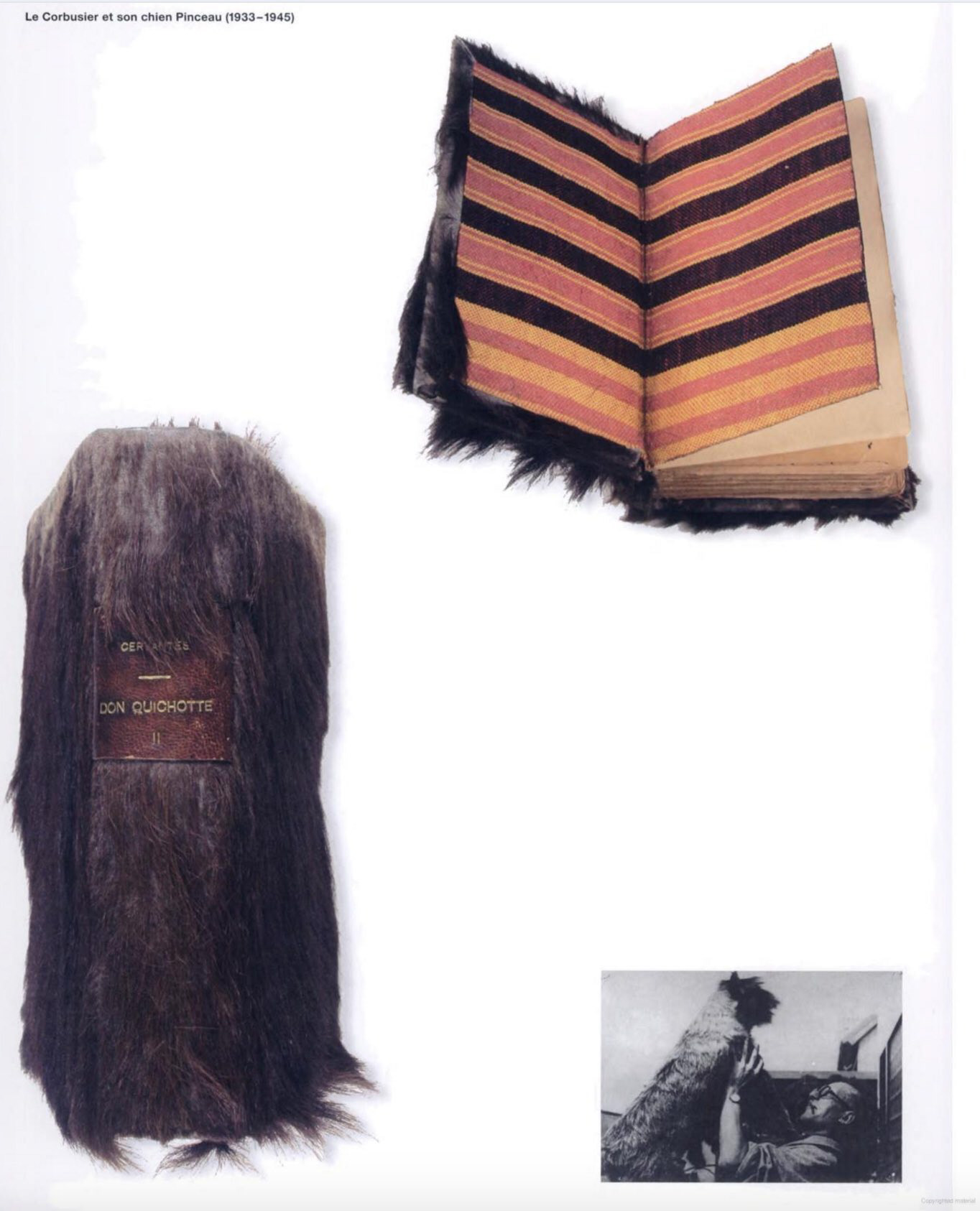
Figure 5. Le Corbusier’s Don Quichotte around 1945.
Fabian: Talking about the role of the animal in modernity, you referred to the anecdote of Le Corbusier and his dog "Pinceau". In that particular case, Le Corbusier used his beloved dog’s fur to cover one of his old books of "Don Quichotte" [fig. 5]. This reminded me strongly of a lecture I have heard from Beatriz Colomina at the RIBA in London. It was all about the perversions of Bauhaus and how animalistic architects behaved besides their effort to keep modern architecture and especially the image of modern architecture so sleek and pristine. Could you say, even if the animal as representational and cultural motive is suppressed in modern architecture, certain traits and connections to animals surface anyway?
Kostas: The story about Le Corbusier and his Schnauzer is very interesting. And although some people have written on this, we do not really know the exact details. Nevertheless, Le Corbusier is maybe the most seminal figure when we are talking about all these references and relations to animals in modern architecture. First of all, Le Corbusier was identified by himself as an animal. He was a raven as he called himself Corbeau, which in French is reminiscent of a crow, a raven. But he also liked to transform himself into other animals depending on the situation. E.g. there is a series of letters by Le Corbusier in which he writes about his or other dogs and that he could see himself as one. But Le Corbusier could also become a donkey. There is this captivating sketch by Le Corbusier – also at the back cover of Christine Boyer’s book on Le Corbusier – where once the donkey is on top of the raven and once the raven is on top of the donkey. And of course, this discourse is also part of Le Corbusier’s book on "Urbanisme", where he discusses the path of the donkey as representing premodern societies and the new path of the architect which must be the path of the straight line. So yes, there are all these extremely interesting references and Le Corbusier was an extremely creative intellectual. That's why one can find so many references to representations of animals. And in general, when we look towards the more creative persons like Le Corbusier it is an area where we find a vast range of animals. But since you talk about Colomina, there is a piece she had written about Adolf Loos. When we think about the bedroom that Loos designed for him and his wife Lina, which is this kind of furry bedroom, it has fur all over the walls, what does it mean? Especially for an architect who is supposedly a very rational architect, with very bold and abstract forms? What does it mean to have a bedroom which is like an animal? It is like the hug of a huge white bear. But we also have another important architect, Dimitris Pikionis, who has many different representations of animals, symbolic and mythical – animals related to history and tradition. What does it mean for an architect like Pikionis and for his architecture? You also have Lina Bo Bardi. She also had a lot of references to animals. There is this story about the Siamese cats that Lina Bo Bardi and her husband Pietro Maria Bardi brought with them from Italy to Brazil. We have all these references mainly to wild tropical animals or fantastic animals like the "polochon". In my opinion, those kinds of creative persons and creative architects, they form some creative intensities. And if you investigate these intensities you usually find animals that play the cultural and critical role that I am referring to. Exactly what you say – it is because the animal is suppressed in modern architecture, that the resurfacing of these suppressed animals gains value in the discourse about modern architecture. It is not something which is obvious but it is everywhere. It is something which is suppressed and when it resurfaces it becomes interesting. It poses a lot of questions. Why is the animal there and what is its function? And since we are talking about resurfacing and suppression, although this may sound too psychoanalytical, we have to rethink and accept that Freud was among the few who explained how animals, e.g. the wolf in "Wolfsmann" or the horse in "Little Hans", were essential parts of our modern, biological and cultural identity. So it is not a coincidence that we are discussing animals in Modernity through the resurfacing of these suppressed symbols – these isolated case studies.
Fabian: What you would argue is that in fact, the really important work and the really rich architects, you call them creative architects, those are the ones having an oeuvre which is much more holistic than we think, right? It is way broader and probably therefore of such importance to us.
Kostas: Exactly. Usually, they are architects who write a lot, think a lot about themselves, who paint, who are creative in a more general way, who write poems, their mémoires, whatever. We will never argue Le Corbusier is a good philosopher, or Lina Bo Bardi a good social scientist but we can discuss many things in relation to philosophy, social science or cultural studies through their work. And that is the interesting thing. There is a huge area of research in the case of those persons, that it is certain that sooner or later you will find an animal somewhere, somehow, meaning something.
Fabian: This is indeed a beautiful thought and serves as a great basis for our last question. Considering your seminar on "Animals, Architecture and the Critique of Modernity", do you think architecture in general positions itself between the human and the animal? Is there a chance of architecture to be as much in a state of metamorphosis as Gregor Samsa is transforming in Kafka’s novella "The Metamorphosis"? Is there a chance to conceive instead of "architecture and animals" an "architecture as animal"?
Kostas: Well, I am not sure if I would go that far, to claim that architecture can be conceived as an animal. Or maybe it is not very clear to me, what this actually could mean. But one way to reflect on this, though, is to accept that architecture is an animal in the sense that it contains life. On a more conceptual level, architecture is about the container and the contained. There is a very interesting text about the container and the contained by the British psychoanalyst Wilfred Bion. He wrote about the issue in more developmental terms saying that our experience of everything starts through our experience of the container and the contained. So, in this sense, I could say that architecture is an animal when we talk about the container and the contained. This is something that at least in mammals is very clear. In any case, I prefer to see architecture as a human practice, which is interesting exactly because it relates to us humans directly. Nevertheless, your example of Kafka's "Metamorphosis" is to the point as it reminds us that so many works of literature, of theatre, of visual arts in Modernity, engage with the animal in a central role. The question is, why are animals absent from architecture? Or why are animals absent from the history and theory of modern and postmodern architecture? There are a few texts, of course. E.g. the architectural historian Catherine Ingraham or the art and architectural historian Spyros Papapetros are one of the ones who have written a couple of texts on animals – in Siegfried Giedion’s as well as in Friedrich Kiesler’s work. But in general, animals are absent from the modern or postmodern architectural discourse. And when we think that animals are everywhere, in Modern Theater, Modern Art, Modern Music, in everything other which is creatively Modern, a huge question arises. If I want to come to a conclusion: I still believe in architecture as a humanist theory and practice – even although I am well aware of what we call animal studies. It is also problematic that a lot of scholars in animal studies try to distance themselves from the humanistic tradition and try to speak from the animal’s point of view. Some say we should transcend the humanistic tradition, the humanistic point of view, by developing new ways of discussing and ways of discourse, from the perspective of the animal. In my opinion, this is impossible. It is not something we can do – however hard we try, it is an impossible project. But what I totally agree is that it is urgent and I would add it is rather humanistic to show more empathy for animals, to rethink the right of the animals, to moderate our brutal exploitation of animals. All this, we should and we must do as soon as possible. But the challenge for me, and the way I see this project of mine, is to critically redefine humanism, not to reject humanism. Post-humanism, for me, is not the rejection of humanism. Again, it is the expansion of it. It is the task to make it richer, more open and more critical. And in any way, I am sure that by including animals in this discussion we will certainly enrich and expand our understanding of architecture and our understanding of ourselves.
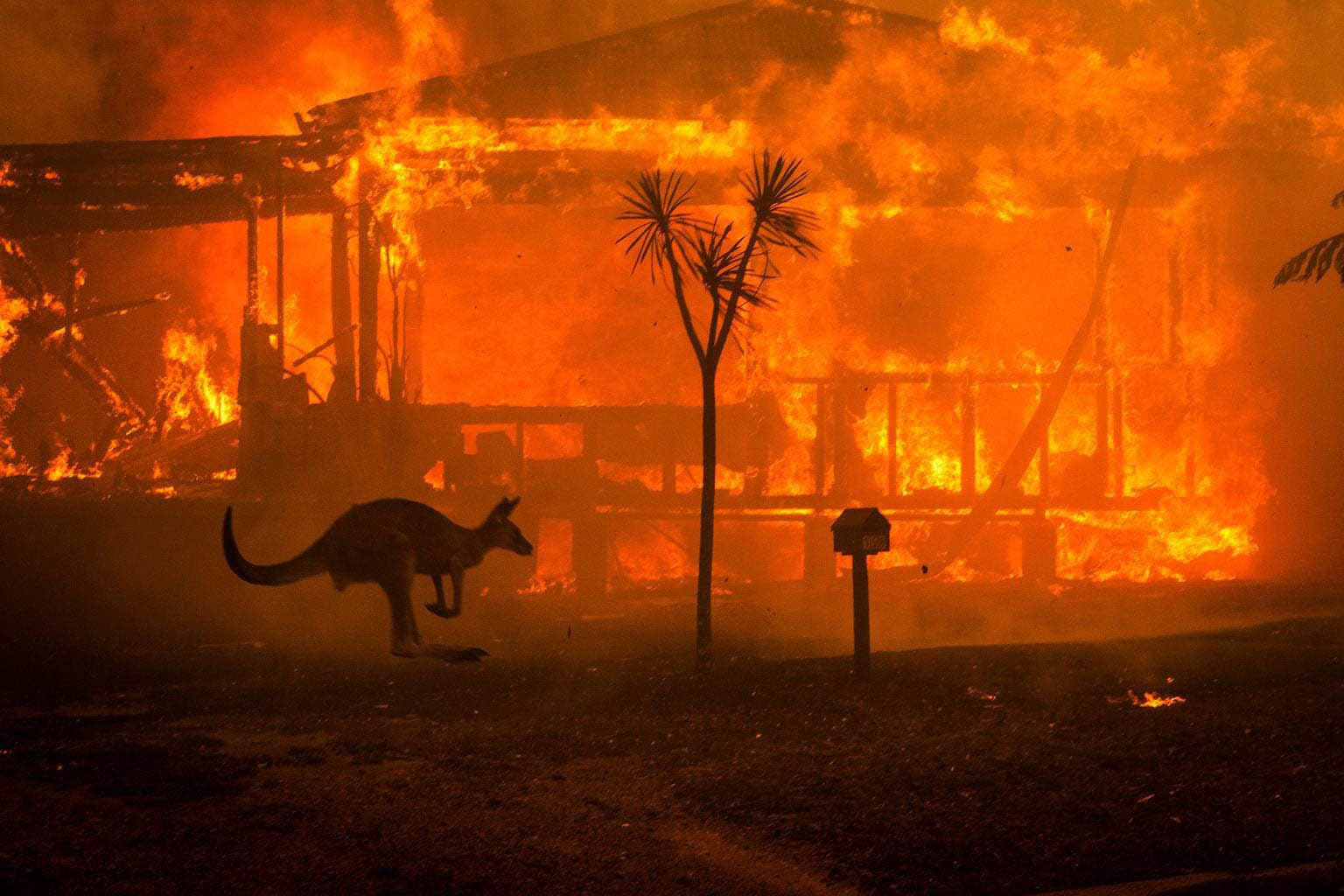
Figure 6. Australian Wildfires, beginning of 2020.
Fabian: I am really curious where this will lead within the next couple of years. Especially as you mentioned that you have a lot of colleagues researching on the topic of the animal within architecture. It is exciting how broad and rich the coming discussion is going to be.
Kostas: The next step will be an international conference that was programmed for January of 2021. Of course, now everything is on hold and no-one knows what is going to happen but there is already a network. We are eight of us, we are in contact and we are working on this. Let's hope, things will be much better a few months from now, so even if not in early 2021, this conference will take place and we have things to talk about.
Fabian: The most important thing is anyways to keep the discussion going.
Kostas: I am sure, that in the next years more and more scholars will work on the topic. You see, there are already a few texts – nothing more than texts, or conference presentations but these texts were not existing a few years ago. I think it is the very start of something that will be evolving in the next years – and it will influence the architectural discourse of the 21st century.
Fabian: But it probably has a lot to do also with the growing sensibility towards the animal, right? As you mentioned.
Kostas: Of course, and if you remember my very first photo on my presentation in London, the huge fires in Australia [fig. 6]. There you can see, how important animals are in the discourse. I mean, for the very first time, it was clear that animals and the life of these animals gained another status that they did not have before. So, I am certain that because of the environmental crisis, because of the Corona-Virus, because of all these experiences of ours in the 21st century, animals start to be of high importance. In humanities and everywhere, everyone discusses animals. Animal Studies is rather a trendy topic and I am sure that animals will become much more important in the history and theory of architecture as well.
Fabian: I hope so too. Although what I see as a bit difficult, personally, is the fact that the fire in Australia and the care towards animals could only happen because humanity in Australia is already that far advanced. I mean, they are at such a privileged stage that they can afford it. I wonder when this moment will arrive also in countries which are less developed.
Kostas: Yes, you are right, but I think this specific photos of firemen hugging kangaroos, or a lady feeding a koala – that kind of photos were not so common, not that interesting 10, 20 years ago. I think we already talk about animals in a different, much more empathetic way.
Fabian: Yes, we do. And it is also a long process. It will take decades.
Kostas: Yes, it will.
Fabian: We are optimistic. Thank you very much for your interesting thoughts and your precious time. I really enjoyed that.
Kostas: Thank you very much, Fabian. It was very helpful for me as well, trying to put my thoughts down, and to think and to respond to your interesting questions.
This interview as well as the seminar Kostas held at the Architectural Association is owed to his research fellowship at Princeton’s Seeger Center, where he investigated animals in modern Greek architecture.

Δεν υπάρχουν σχόλια:
Δημοσίευση σχολίου